


Why Are Investors Taking a Second Look at The Gambia?
A closer look at the economic, infrastructure, and property signals reshaping the investment conversation around The Gambia.
Khidra Developments • 9 October 2026
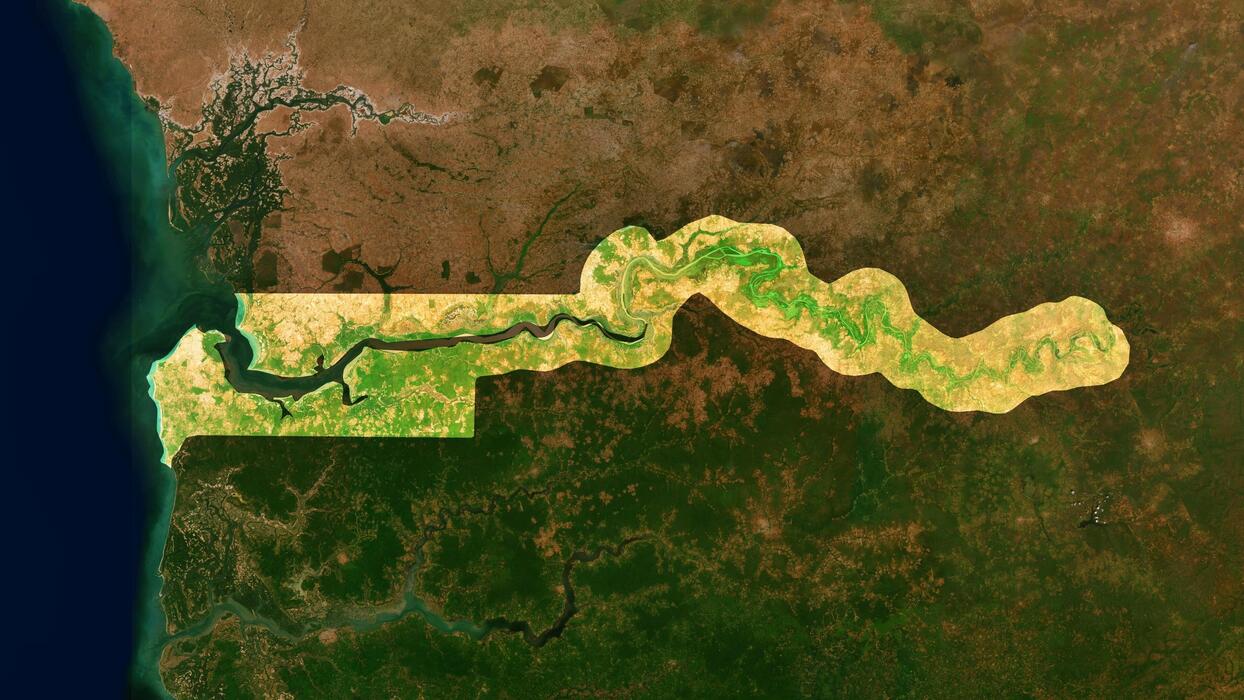
Everybody wants to be an early investor. At least, that is what people say. What conventional investors usually mean is that they want to enjoy the upside of early entry, with the confidence that someone else has proven the opportunity to be safe. Securing that combination can be difficult. By the time everybody agrees that a place is worth paying attention to, entry costs may already have risen. Take the rush to Zanzibar and Belize, for instance.
This is one of the reasons why The Gambia is becoming increasingly interesting. There are enough economic, infrastructural, and private-sector signals moving in the same direction to justify a closer look.
While the investment outcomes and the prospects for individual developments look uncertain to the conventionally trained eye, the serious early adopter looks for evidence strong enough to deserve investigation before a wider consensus arrives.
The Cost of Being Early
Being early is uncomfortable because early-stage markets are still taking shape. Infrastructure may still be developing, institutions may still be improving, and consumer behaviour may still be changing. Reliable market data may also be limited. Conventional investors need to assess how these conditions affect an opportunity’s prospects. An early adopter accepts that certainty usually comes at a premium. As an opportunity becomes more obvious, prices, competition, and investor attention may already have adjusted around it.
These conditions matter when considering a smaller emerging market such as The Gambia. The World Bank describes The Gambia as the smallest country on mainland Africa. Its World Development Indicators (WDI) place the 2025 population at approximately 2.82 million. In a smaller economy, structural change can sometimes be easier to observe. A major road can alter the relevance of an entire corridor. A significant hospitality project can influence hotel supply and the businesses that serve it. A new class of residential development can reshape expectations around how professionals, returning diaspora, and internationally exposed consumers want to live.
The wider conversation around African Real Estate increasingly considers the forces that create property demand. Understanding why buildings are becoming necessary offers a useful starting point for understanding The Gambia.
Real Estate Is a Consequence of Economic Activity
A new apartment building can attract attention through an impressive lobby, beautiful finishes, and a polished brochure. An investor also needs to understand why people will want to live there. Demand depends on the reasons people have to occupy those apartments.
Jobs create housing demand. Businesses create commercial demand. Tourism creates hospitality and short-let demand. Migration changes neighbourhoods. Infrastructure alters commuting patterns. Education, professional services, and lifestyle shifts affect where people choose to live and how much they are prepared to pay for convenience. Real estate is therefore often the physical consequence of economic behaviour. This is why serious Real Estate Development should begin with an understanding of demand.
For an investor considering The Gambia, this means asking what gives people reasons to live, work, visit, spend, and invest in particular areas. Understanding those factors helps explain where property demand could emerge.
Understanding the Economic Direction
The economic landscape provides a useful starting point. According to the World Bank’s 2026 economic update, The Gambia’s economy grew by an estimated 5.9% in 2025, compared with 5.6% in 2024. Activity across agriculture, industry, and services supported this growth. Tourism also continued to recover, with arrivals rising from 224,472 to 233,113. Those figures encourage further investigation.
The IMF’s 2026 Article IV assessment estimates real GDP growth at 6% in 2025 and projects a slowdown to 4.7% in 2026. Growth is then expected to stabilise at roughly 5% over the medium term. The assessment also points to renewed inflationary pressures, fiscal slippages, external risks, and climate shocks. Understanding those risks helps investors assess the country’s prospects. The useful question is whether growth, reform, infrastructure, and private activity are creating a trajectory that merits deeper investigation.
A market becomes interesting when its underlying direction begins improving faster than its wider perception. Assessing the direction of change alongside growth figures helps investors understand that trajectory.
Where Future Property Demand Could Come From
Tourism remains one of the clearest drivers of Gambian economic activity. The World Bank estimates that the Tourism sector contributes about 20% of GDP and 15% of employment, making it one of the country’s most important sources of jobs and economic activity. For many international visitors, The Gambia is initially understood through beaches, resorts, and winter tourism. These remain important parts of the country’s identity. Investors can also examine how tourism supports a wider ecosystem of economic activity.
The Gambia Investment and Export Promotion Agency identifies agribusiness, ICT, renewable energy, light manufacturing, transport, and tourism among its target investment sectors. In March 2026, GIEPA also hosted a World Bank private-sector diagnostic mission focused on tourism, fisheries, and digital financial services. Each of these sectors can create property requirements. A stronger hospitality industry creates demand for hotel rooms, staff accommodation, restaurants, retail, transport, storage, professional services, and residential rentals. Expanding ICT and financial services bring professionals who require housing and companies that need commercial space. Agribusiness and trade can create demand for warehousing, industrial facilities, and transport-linked property.
Infrastructure can accelerate that process. In May 2025, the World Bank approved US $52.6 million for transport and energy infrastructure in The Gambia. This included 60 kilometres of rural and urban roads, electricity connections for 80 rural communities, and upgrades to critical energy infrastructure in the Greater Banjul Area. In 2026, the World Bank reported that electricity access had reached around 90%. It also stressed that reliability and universal access still require further investment.
The effect of infrastructure on property values depends on the location and the demand it serves. Investors need to assess how a new road or an electricity connection changes the practical appeal of a particular property. Roads reduce travel time and can change commuting behaviour. Better power supply improves the environment for business. Growing commercial activity can influence where people want to live, spend, and operate. Following infrastructure investment helps investors understand the conditions that may support future property demand.
When Capital Arrives Before Consensus
Institutional and private capital provide another useful signal. In June 2026, the International Finance Corporation disclosed that it was considering US$11 million in corporate financing as part of a wider US$20.76 million investment programme. The programme covered four Gambian beachfront hotels: Balafon Beach Resort, Kombo Beach Resort, TUI BLUE Tamala, and Kalimba Beach Resort. It proposed expansion, refurbishment, and energy-efficiency improvements. At the time of disclosure, the project was still pending approval and the financing remained proposed.
The consideration itself is meaningful.
An institution such as IFC commits research, due diligence, and institutional resources before capital is deployed. A potential transaction provides one piece of evidence for investors to assess alongside other developments. Tourism recovery, infrastructure investment, construction activity, power improvements, private-sector expansion, and institutional interest collectively warrant closer investigation. Curiosity can be the beginning of that process.
The Diplomat as a Market Signal
One development worth examining in this context is The Diplomat. The project is a two-tower mixed-use development with 92 residences and approximately 4,000 square metres of retail and office space. Local reporting by The Point valued the development at about 1.7 billion dalasi when it officially opened in March 2026.
Those figures invite a closer look at the demand behind the development. Every major property development is essentially an opinion about future demand backed by capital. A developer building two mixed-use towers is making assumptions about the type of consumer the market can support. Consumers who intrinsically value proximity, security, convenience, amenities, modern residential environments, professional workspaces, and integrated commercial activity to be specific.
That makes The Diplomat useful as a market signal. Its reported occupancy offers evidence of demand for a more sophisticated urban property product. The project suggests that the market may be capable of supporting products that would previously have seemed less obvious. For an early investor, this is precisely the type of change worth watching.
Managing the Property After Purchase
For diaspora and international investors, purchasing a property begins a long-term operational responsibility.
Who manages the tenant, collects rent, and follows up on repairs?
Who verifies that maintenance has been completed and handles utility problems?
Who provides reliable information when the owner is thousands of kilometres away?
Day-to-day management helps protect the asset throughout ownership.
Khidra Developments offers a property-management service that covers tenant sourcing, rent collection, utility management, regular maintenance, repairs, and emergency response. The company also acts as an on-the-ground representative for overseas owners, providing regular updates and transparent financial reporting. Investment performance depends on how an asset is managed throughout ownership. There may be ten or twenty years between entry and exit, and those years matter.
Professional management can help preserve the value that attracted the investor in the first place. International buyers should consider who will protect and manage their property after they leave The Gambia.
Khidra also offers an opportunity for Early Adopters to test out the market and conduct on-the-ground investigations through short-term rentals inside of its flagship project, The Diplomat.
Due Diligence for Early Investors
Early investment calls for patience and evidence. An early adopter investigates an opportunity before committing capital. A serious investor needs to assess title, tenure, developer credibility, location, and rental demand. The review should also cover operating costs, taxation, management, liquidity, and exit options. Investing from abroad calls for particularly thorough due diligence.
Khidra’s own guidance says it conducts ownership checks, verifies documentation with legal professionals, and confirms land status with the relevant authorities before payment. The company also explains the distinction between leased and freehold land in The Gambia. These details deserve careful attention. Identifying an opportunity should prompt investors to ask thorough questions.
The Gambia has genuine challenges. Its infrastructure is developing, its economy remains vulnerable to global conditions, and its property market requires serious due diligence. Investors can assess these risks alongside the country’s expanding economic activity, significant tourism sector, and continuing infrastructure investment. Broadening private-sector opportunities, more sophisticated developments, and international institutional interest add to the picture. Together, these factors make the market worth watching.
Early adopters develop the ability to recognise patterns before those patterns become widely recognised. The Gambia offers several developments worth following closely. Are you watching?
| Exploring The Gambia as part of your investment strategy? Khidra Developments works with investors and property owners seeking trusted local insight, professional property management, and access to opportunities within the Gambian market. Explore Khidra Developments and its approach to African Real Estate. |

Join The Discussion